

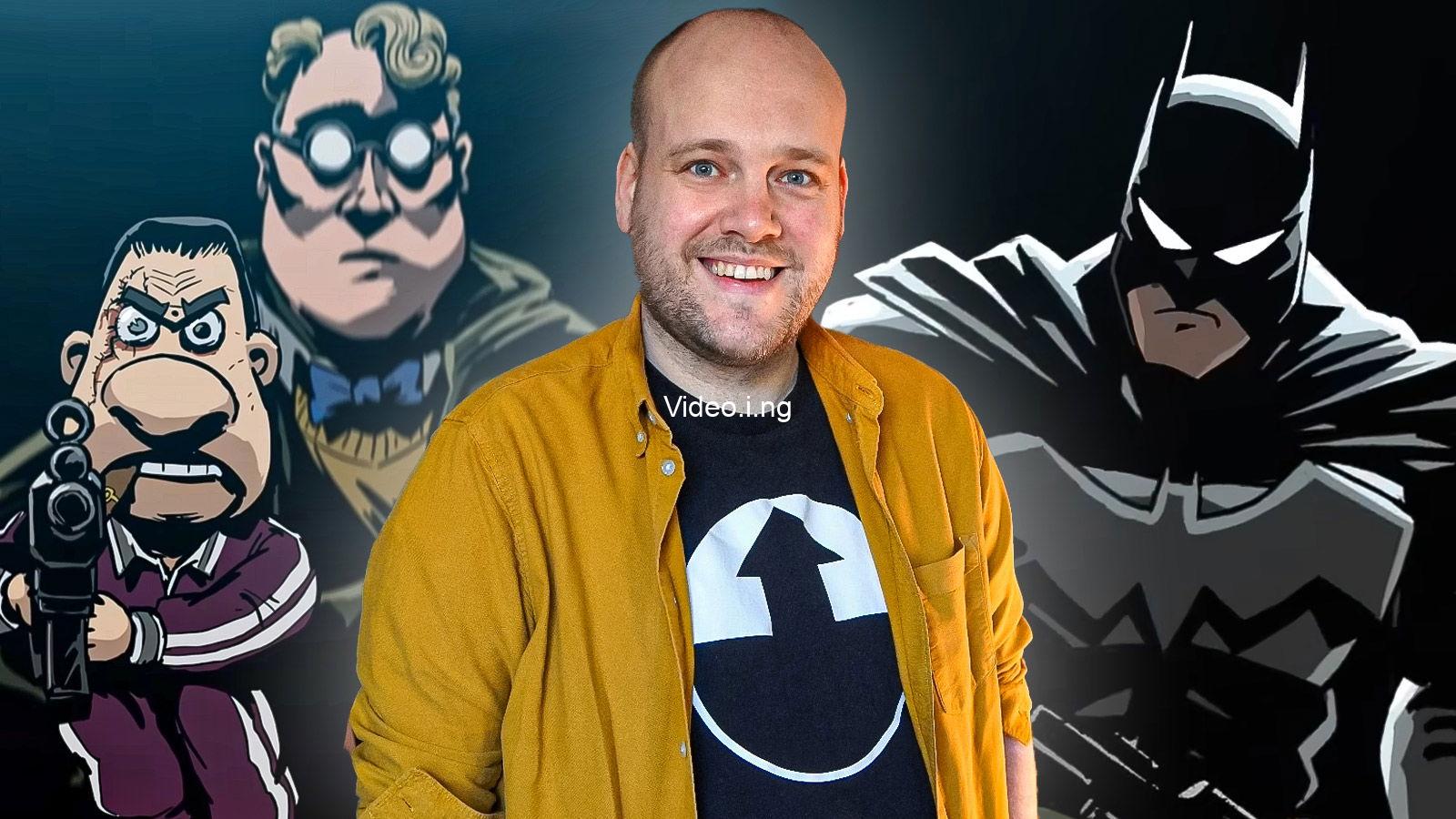
Batman: Broken Promise came like the oncoming storm during a time when fan-edits and fan animations were slowly taking over the world. Social media now floods with such edits, but it was Stephen Trumble’s piece that stood out like an unlikely ray of hope. FandomWire got the opportunity to interview the creator of the animated short, and never could we have imagined just how the project came to be.
Fan animations in today’s day and age highlight something that has been in gradual growth for years: animation as a medium of complete and free expression. Released in 2022, Batman: Broken Promise took two years to make, with a dream that any fan can have. Trumble just did one thing differently; he took his pen and started drawing out that dream.
Interviewing Trumble made me realise that Batman’s stories aren’t just hidden between the panels of a comic or the scenes of a movie and TV show. They can be in the shadows and right in front of us, too. Here’s what Trumble had to say about how his love for Batman became its own reality.
Q. How did the idea of Batman: The Broken Promise strike you?
Stephen Trumble: It was a few months into the pandemic, and I was locked down with my partner. Then the DC Fandome teaser trailer for ‘The Batman’ came out, and I got intensely hyped. I started sketching Batmobiles for fun, just as a hobby. Then I started drawing Batsuits. I’d always wanted to try animation out, so I started doing some random shots of Batman punching people.
Then it grew and grew. Started out as a simple fight sequence, then I decided to add Two-Face. Then the dialogue for that started to form in my head. Then, a year later, I was fully in production of a fan film! My partner Claire Wickes is an amazing composer, and she offered to do the score. I cast myself, my brother, and actor friends in the speaking roles. It was a real home-made project; no one got paid. It was just for the love of it.
Batman in Batman: Broken Promise | Credit: Stephen Trumble Animation
In a way, it was made completely backwards. The opposite way you should make a film, starting with no script and with the story coming together last! I’ve always loved the character of Two-Face, and so a lot of what went into the story was things I’d always wanted to see happen with that character, especially the ending. So in a way, I had already been cooking up the story in my head for years, without realising.
Q. How long did it take you to make the animated short, and was there any scene in particular that took longer than expected?
Trumble: The film took two years, all in all. It would definitely have taken longer if it hadn’t also been made during the pandemic. The scenes that were the most unexpectedly slow to produce were actually the less complicated ones. Dialogue sequences, or characters entering and exiting rooms, picking up an object, or just slowly turning their head. Those moments require lots of intermediate frames and are far less exciting to animate, especially when you don’t have a team at your disposal. Those bits really, really tested my patience and ADHD. Shots of Batman throwing punches and flying around with his cape are fun and graphic and dynamic, and once you get started, they flow really fast.
Q. Why the focus on Ventriloquist over other, more popular villains from the rogues gallery, like Scarecrow or Joker?
Trumble: When the Ventriloquist popped into my head, it felt like one of those ideas where once you’ve had it, you’re kind of screwed. You have to do it. I was instantly pissed off at myself. Now I had to animate five more minutes into the film by myself! Normally, in Batman stories, when rogues get paired up, it is to add a bit of variety, and they tend to directly contrast each other. These two characters actually have so much in common.
They’re both street-level, split-personality villains, and both were trying to be good men but were enslaved to an external object that controls their every move. Suddenly, it felt crazy to me that they hadn’t already been in a big team-up before. It felt like they were destined to collide. Scenes suddenly wrote themselves, and the story was twice as strong on a thematic level. And Batman himself has a dual personality; it all ties together too well not to do it.
A still from Stephen Trumble’s Batman: Broken Promise | Credit: Stephen Trumble Animation
Also, Scarface is just fun. He’s so enjoyable to watch, write (and perform). It’s like dropping Joe Pesci into the middle of your dark, po-faced story, and letting him eat the furniture. He also loves the sound of his own voice. If you need some exposition set up for the audience, Scarface can just come out and bluntly say it.
Personally, I feel like everything worth saying about The Joker as a character was said in ‘The Dark Knight.’ If that were the only Batman film ever made, it’d still be a perfect standalone story. By the time Joker says, “I think you and I are destined to do this forever”, there’s very little more to say.
You could do another story with the Joker, and yeah, it’d be awesome, but it’d just be a repeat of the same plot points. He’d try to push Batman’s limits, maybe kill another person he loves, Batman would catch him but not kill him, etc, etc. It’s already been done better by someone else. If I’m going to write a story, I want it to explore villains that haven’t been given that full treatment yet.
Q. Was ‘Broken Promise’ inspired by any particular Batman comic issue? If so, in what way?
Trumble: ‘The Long Halloween’ by Jeph Loeb and Tim Sale is a huge inspiration. I see that whole run as a canon event, so any story I would write featuring Harvey Dent would take place in a world where a version of those events happened. There’s even a moment in ‘The Long Halloween’ where Bats, Harvey Dent, and Gordon make “a promise”, which ties directly into the title of my story. That was a total accident, I only noticed it later!
Another big inspiration was ‘Batman: The Animated Series’, mainly how it depicts Bruce’s prior relationship with Harvey and his need to save him. The Two-Face two-parter is iconic, but the episode ‘Second Chance’ probably informed my story the most in terms of tone and emotion. It also features a fist-fight between Bats and Harv at the end, which happens in my story too. I see Bruce and Harvey as surrogate brothers. There’s something very fraternal about the fight at the end. Batman doesn’t want to hurt Harvey; he wants to push Harvey to change.
Q. What went into designing the tone, action, and color palette of the short to avoid making it too clunky or campy?
Trumble: Because I don’t have a ‘Spiderverse’ level of time and money, I knew the animation would be imperfect and janky. So I just leaned into it and called it a style. The artwork is deliberately hand-drawn and messy; it’s animated on 2’s, 24 frames a second. Instead of trying to match a more polished and expensive model, I made my limitations a positive.
Harvey Dent | Credit: Stephen Trumble Animation
The original ‘Netflix Daredevil’ show is one of my favourite pieces of superhero media of all time, and I always had that in the back of my mind. I tried quite hard to evoke the cinematography of that show, right down to the inky shadows and added film grain. I originally went to film school wanting to be a director, and so I chose to design the film as I would have attempted to direct a live-action Batman.
I wanted the fight scenes to look and feel as though they had been choreographed and captured on set by a camera crew, with stunt people. All the “camera moves” are ones that could be achieved by a real camera; there are no impossible anime-style shots. I think that makes the film feel grounded and gritty. Another big thing was the shadows. Films these days very rarely have true-black shadows, which is a shame. I really wanted that blocky graphic look; it screams comic book to me.
Q. Is there any particular symbolism behind the red and blue contrast in the short?
Trumble: There’s a lot of symbolism in the film, and I like that there are a lot of ways the viewer can choose to read it. Political polarisation, or radicalisation in the internet age. Scarface, who considers himself a businessman with no morality at all except power and money, is wearing purple. That’s all there is if you want to see it, but it doesn’t need to be one thing or the other.
Funnily enough, the original seed of the idea for the red and blue was actually ‘Batman Forever’, which is a film that I unapologetically love. It was the first Batman movie I saw at the cinema, and it really kicked off my love of Batman and also the character of Harvey Two-Face. Joel Schumacher’s films got a lot of hate at the time, but I was a kid, and I went mad for it. Anyone who thinks Schumacher isn’t a brilliant director hasn’t seen his other work. To be fair, his fluorescent campy style is just as legitimate a take as the spooky, carnivalesque Tim Burton style.
Batman in the animated short film | Credit: Stephen Trumble Animation
They’re both idiosyncratic and deviate from the comics. It’s worth noting that Schumacher was one of the few out, openly gay film directors at the time. His Batman felt like it was filtered through the lens of a drag queen show. Gotham is one big party. Every character is serving a look. It’s Batman Eleganza Extravaganza! Fans might not have been buying what it was selling, but I think it’s actually kind of wonderful in hindsight.
Even though my film is tonally very different, I wanted to pay homage to it. So that’s where the use of ultraviolet paint and neon colours came from. My Two-Face has just a little bit of that Schumacher DNA in him. It’s my way of saying, “Hey, I’ve found something to love in every version of Batman.”
Q. Contrary to film versions, Two-Face is not a total villain beyond saving, but rather in a constant battle of good vs. evil inside him. Was this in some way meant as a redemption of Christopher Nolan’s treatment of Harvey Dent/Two-Face in The Dark Knight?
Trumble: In most Batman media, we get the snarling gun-toting gangster version of Two-Face, and in nearly every story I’ve seen, he flips his coin and it comes up “bad heads”. Which makes sense if you’re a writer, because if he doesn’t try to kill Batman, where’s the conflict in the story? But I feel the opposite way.
You have this character who has so much potential for drama; he literally can turn on a dime. For him to be bad all the time is like writing with one arm tied behind your back. Why can’t we get a “Good Harvey” in 50% of Batman stories? I’d love to see that. The Harvey in Broken Promise could be seen fighting by Batman’s side, if you caught him on the right day.
It’s easy to forget that in ‘The Long Halloween’, the seminal Two-Face story, it ends with Harvey surrendering himself to Jim and Bats. I knew from the beginning that I wanted my story to end with the coin landing on “good heads” and Harvey giving himself up. In my film, even though Batman doesn’t technically “win” the physical fight, he does defeat Two-Face.
Related: “They were involved at the very inception of the film”: Christopher Nolan Helped Create the Most Underrated Batman Animated Movie of the 21st Century
By stepping out of the shadows and appealing to Harvey’s goodness, he re-frames the stakes of the coin flip. He says, “You can end this right now, you can stop”, and so when Harvey flips the coin, the question he’s asking isn’t “Kill Batman/Don’t Kill Batman”; it’s “Kill Batman/Stop”. Bruce believes in Harvey, and by pushing him, he opens up the possibility of doing the right thing. He buys Gotham a 50% better chance. That’s how he wins.
I love Two-Face in ‘The Dark Knight’, but the real tragedy there is that he had to die at the end of that story, when there’s still so much more his character had to offer. A third movie with Two-Face as the main antagonist would have been really exciting, I think. Unlike the Joker, he had more story to tell.
Q. The climactic speech by Two-Face is better than most of the dialogues we’ve had in recent films over the years. What inspired the whole rousing “No more 1%, no 99%” monologue?
Trumble: Aww, thanks, that’s incredibly kind of you to say! I’m always so grateful when people say nice things about the writing, not just how the film looks.
Villain monologues are always fun, but it’s very easy for them to feel extraneous and forced. I decided to work out Harvey’s ideology first, imagine it was my own, then follow it through to its most extreme conclusions, and just see what happened. I thought to myself, “In today’s modern world, what would Harvey Two-Face hate above all?” And what came back to me was “Inequality”. He’s just allergic to unfairness. As District Attorney, Harvey would have seen corruption everywhere.
A still from Stephen Trumble’s Batman: Broken Promise | Credit: Stephen Trumble Animation
Legalised corruption, and done so brazenly right in everyone’s face. During the monologue, he flips back and forth between liberal and conservative, but his hatred of inequality transcends both. It’s been fascinating to read the comments on the YouTube page, because we get positive feedback from presumably liberal and conservative-leaning people, who assume that I am liberal or conservative too. I think it’s very telling that ordinary people on both sides of the political divide can agree on one thing, and it’s the haves and have-nots. The people at the top screw the people at the bottom.
Then to write the actual lines, I just spent a few days walking around kicking my feet and muttering angrily to myself, haha. It was like method acting. I’d sometimes go to a coffee shop or a pub and let thoughts just spew out into my sketchbook, like the scribblings of a madman. It’s quite a cathartic exercise, actually.
Also, I have to give credit to my brother David, who voiced Harvey in the film. He workshopped the lines with me and really helped to reshape them. He wrote that great line, “If I can’t control the crime, I’ll control the punishment”. He really got the assignment and gave me so many great options. We recorded the speech in both Harvey and Two-Face’s voices and picked which persona fit for each moment. That collaboration made everything sound authentic and earned.
Q. Politics is an overarching and driving theme of the whole short. Does it, perhaps, reflect the creator’s own frustration with the current socio-political climate of the world?
Trumble: Very much so. I don’t think anyone could look at the world today and not be frustrated.
The one thing that unites people today is that everyone is angry and they don’t know why. They think they do, but they don’t really. All we can agree on is that we’re fucking furious and desperately looking for someone to aim it at. And some people are more than happy to come along and tell us who to blame. And we’re willing to give up our own autonomy and even our rights, for the simple relief of righteous fury. We’re left ripping each other to shreds, when the people most directly responsible for our suffering have already snuck out the back door with the money.
Scarface and the Ventriloquist in Batman: Broken Promise | Credit: Stephen Trumble Animation
I myself have had moments in my life when I’ve struggled with depression and resentment. The modern world is so overwhelming, it can feel like nihilism and moral relativism are the only practical ways to live in it. The world incentivises you not to care. Arnold Wesker is quite important in the film to me, as he represents the people who just want nothing more than to have their choices taken away and surrender their agency to someone else. At first, it’s Scarface who tells him what to do, then he trades him out for the more charismatic Two-Face, but ultimately, he’s betrayed anyway.
In the film, when Harvey loses his coin, he becomes this feral volcanic rage monster, because that’s what he’s sitting on. He thinks he’s moved beyond it by giving up his choice, but it’s right there waiting to bubble over. Batman has a morality that can’t be overridden by his hatred, no matter how much it boils inside him. In today’s world, people aren’t automatically good, and it’s easier not to be. You have to make an active choice to be, and continue to choose to be every day. I believe that if more people chose kindness over their own feelings, the world would be a better place.
Q. What is your (Stephen Trumble’s) take on the latest Superman film? Given his inclination toward a darker tone, does he prefer the former vision of DCEU over James Gunn’s version?
Trumble: I really dug Gunn’s ‘Superman’! You just wanna hug Corenswet, which is how it should be. Rachel Brosnahan is a Lois for the ages. Everyone says Krypto steals the film, but they’re wrong; it’s Mister Terrific. Not every line of dialogue was for me, but overall, the film was full of heart and very satisfying. The best compliment I can give is that it’s a film I’d want to watch with my nieces and nephews.
It’s funny that you say I have an inclination towards a darker tone, because I see ‘Broken Promise’ as quite a hopeful film, haha. Or at least, Batman is a hopeful figure within it. In the end, the coin lands right way up, so I guess I’m a glass-half-full person. If I made my own Superman film, it’d probably be bright and colourful and optimistic, closer to Gunn’s. I’m a DCAU/Justice League Unlimited kinda guy. I like my heroes to have a mix of different tones. I’m all about Clark being a big-hearted softy and bear-hugging Bruce and making him all uncomfortable.
Related: “It seemed like it was going to be the same thing”: Teen Titans Showrunner’s Batman Animated Show Wanted to Avoid 1 Critical Mistake after Batman: The Animated Series
I liked ‘Man of Steel’ a lot, especially the design of the science-fiction elements, though the collateral damage at the end did feel tone-deaf to me. Then Batman v Superman lost me, unfortunately. The only way I can describe it is that I liked everything in it, but I hated the film. Does that make sense? I liked the cinematography, music, and performances. I like Cavill, loved Ben as Bats, Wonder Woman worked great, and Snyder’s artistry. But the film itself had such a relentlessly dour tone that I left the cinema feeling exhausted and miserable. That was just my personal experience of it.
If I have one controversial DC take, it’s that I have zero interest in “Evil Superman” or “Evil Batman” stories. Snyder’s version of DC started with Batman killing random people, and Superman heading towards an Injustice-style arc, and so it just didn’t appeal to me. I know that the people who love it really love it, and that’s totally fine.
These days, everyone’s always trying to pit fans against each other, which is sad. I’m a big fan of artists. I’ll respect any interpretation if it has a considered, creative vision behind it. It was those handful of films between Snyder and Gunn’s tenures that made me completely switch off. They felt like they were being made by committee. Throwing random stuff at the screen and saying, “You like this, right? How about this???”. I’m just so happy there’s an artist back behind the wheel at DC. Finally, I can relax and be an audience member again, not a “consumer” of content.
Q. Which other comic book IP is next on the list of being adapted? A few details on this, if possible.
Trumble: Well, I can actually give you an exclusive scoop! I’ve already started work on a new Batman short film! It’s not going to be a direct sequel to ‘Broken Promise’; it will be a new standalone story in the same continuity. I want to make Batman films like an anthology, like ‘Gotham Knights’. So this new film could take place in a different time in Bruce’s life, a different place, he could be wearing a different suit, with different side-characters.
Can’t give away too many details story-wise, but I can confirm that the villain will be… not Joker.
A still from Stephen Trumble’s Batman: Broken Promise | Credit: Stephen Trumble Animation
I want to continue to highlight characters that rarely have their day in the sun. If ‘Broken Promise’ was my definitive Two-Face story, I want to do the same for another rogue. It’s early days, and I’m considering doing a Kickstarter for the project, because I have a full-time job now, and animations require a huge amount of time and effort to produce. I’d also like to be able to pay some actors, and maybe bring in some more artists. I’ll hopefully be posting updates on Instagram and YouTube very soon, so watch this space!
Q. Has he considered reaching out to DC Studios to officially work on a project? If so, which IP would be no. 1 on the list?
Trumble: The Joker (Just kidding)!
No, I haven’t reached out at all. I’m not even sure how I would go about that! I’d love for someone from DC to see and react to my film, just to showcase my writing and storytelling abilities.
I can’t pick a No. 1 choice for an IP; there are too many ideas! I’d want to do something in the Gotham world, maybe focused on members of the Bat Family, like an ensemble drama with superheroes. Explore the teachings of Batman and Alfred and how they shaped the morality of all that follows them. I find it incredible that no one has made a solo Nightwing movie yet. I think it’d be a licence to print money.
Related: Inside ‘Batman: Broken Promise’ – Fan-Made Batman Movie with 1.9 Million Views Is Peak Cinema for DC Fans
If I were given the chance to do a villain, it’d probably be a full-on horror movie Scarecrow story, or a serious take on Mr. Freeze. Or just let me adapt my Two-Face story into a feature, I’d do that in a second! Or, left-field choice, I’d just beg them to make the ‘Wonder Woman: The Animated Series’ she sorely deserves and has never been given, which is a travesty.
On a more realistic note, I work professionally as a concept artist, so one thing I would absolutely love would be to help design (or redesign) a superhero costume for a movie. A Batsuit would obviously be the absolute peak. But any superhero costume would be amazing! Or a villain. To be a part of such a proud legacy of artists would be one of the greatest privileges of my life.
Batman: Broken Promise is currently available to watch on YouTube.
This post belongs to FandomWire and first appeared on FandomWire